There is an issue with the cache - please click CTRL + F5 to refresh fully and display correctly. Thank you!
Hydroxychloroquine
Created on: 2021-07-30
Modified on: 2024-05-14
Deadly Drug, or Unrecognized Saviour?
Since early on in the COVID situation, hydroxychloroquine (HCQ) has been claimed by some as a likely cure, and others as a dangerous mistake.
If you mention HCQ to most people, and ask for their next thought, it's usually one of the following:
- That medicine that Trump's into. (Followed by a long diatribe about Trump.)
- The guy with the fish tank cleaner, who died.
- A really dangerous drug.
- They tested it and it didn't work.
Let's take these in turn.
Firstly, Trump. It's an age old error, shooting the messenger, and ignoring the message. If we rely on a witness for a statement, then we should check their credentials and biases. But if we don't rely on them, then it's irrelevant who said it. Let's say, hypothetically, Trump's guilty of everything that's said about him. What of it? HCQ was not Trump's idea, nor is he responsible for any of the science behind it.
The guilt by association argument has been played up by the media, but with conspicuous selectivity. As proof of this bias, did anyone ever say, "Vaccines? That's a really bad idea - Trump likes them!"?
No. The media did say it could never be done at "Warp speed," but once they were rolled out, Trump's support of vaccines was quickly forgotten. If we want the truth, we need to look beyond the politicians and media manipulations, to the actual data.
Next, there is the couple which tried to protect themselves by consuming HCQ fish tank cleaner. The man died, and the woman survived.
This is no more than a bizarre and attention grabbing sideshow, as the HCQ they used was of a different form than that used in medicine, and was never intended for human consumption. Clearly it was a stupid move, but perhaps also a desperate one. The story does say something about the intensity of fear generated in March 2020, and its effect on the rational mind. This has manifested in many ways, including the guy who was driving in a car on his own, with the windows up, and yet still wearing his mask, who passed out owing to oxygen deprivation and crashed his car.
Now let's look at some actual science.
Early in 2020, many doctors were using HCQ and claiming success. A study of over a thousand patients in France reported startling success with a combination therapy, including HCQ. However, the medical literature as a whole was contradictory - some studies supported its use, others went against it.
In May 2020, a meta-analysis was made of the data that had been produced worldwide, and collected by the company Surgisphere. This resulted in two papers, one of which appeared in the Lancet, and concluded:
We were unable to confirm a benefit of hydroxychloroquine or chloroquine, when used alone or with a macrolide, on in-hospital outcomes for COVID-19. Each of these drug regimens was associated with decreased in-hospital survival and an increased frequency of ventricular arrhythmias when used for treatment of COVID-19.
So, HCQ and CQ led to decreased in-hospital survival - they caused more deaths than they prevented. Case closed - apparently. The effects of this paper were momentous - on the basis of its conclusion, the WHO paused its own trials of HCQ for a time.
However, hundreds of people noticed inconsistencies in the paper. Ultimately, a report appeared in the Guardian revealing that the Surgisphere papers were simply a fraud. The papers were retracted. Horton, editor of the Lancet, commented:
This is a shocking example of research misconduct in the middle of a global health emergency.
- Richard Horton, editor of the Lancet
However, the damage had been done. The retractions received far less media attention than the conclusions of the original papers. The perception of HCQ as a dangerous drug had been established.
Trials did later resume, including the WHO's, and the RECOVERY trial at Oxford. The paper describing the RECOVERY trial stated:
The results suggest that patients in the hydroxychloroquine group were less likely to be discharged from the hospital alive within 28 days than those in the usual-care group.
End of debate for HCQ? Not so fast. All medicines have a therapeutic window - the range of doses between an effective dose and a dangerous dose. In this, HCQ is no different from common drugs like paracetamol and aspirin. Any of these drugs can be lethal at the wrong dose. If that's reason enough to prohibit the use of HCQ, then most if not literally all drugs should come off the market.
The question is in the dosage. Pre-2020, there were three main reasons for using HCQ: malaria prophylaxis, malaria treatment, and treatment of chronic conditions like rheumatoid arthritis. The CDC declared HCQ as safe, and the WHO listed it as an essential medicine.
The prescribed course of HCQ for malaria treatment is a very intense course of the drug - 2 grams split over 48 hours.
Incidentally, I've personally experienced the treatment for malaria, with HCQ. Without treatment, malaria is fatal. It's truly impressive how quickly the medicine annihilates a bout of malaria, but the medicine is very strong. Even as an otherwise outwardly healthy young man (18 years ago) I would not like to have had a course substantially above the prescribed maximum amount.
But that is how the protocol starts in the RECOVERY trial - at a dose more than 50% higher than the already intense maximum dose for malaria treatment. It then continued at 800mg/day for 10 days.
Yet the standard daily dose for maintenance of the chronic diseases for which it is used is 200 - 400mg/day. The maximum recommended dose is 600mg/day.8
So the freely available data from orthodox medicine shows that the RECOVERY trial used an extremely high dose of HCQ. This is not my opinion, it has been stated by many doctors and medical researchers. It is also noted that:
These medications have a narrow therapeutic window, meaning that accidental ingestion of amounts that exceed recommended dosing can be extremely dangerous with toxicity including coma, seizures, cardiac dysrhythmias, low potassium levels, cardiac arrest and death. Even a single pill can be potentially life threatening to a child.
Consequently, the failure of the Gates funded RECOVERY trial to show a benefit is easily explained. And besides the issues around the dosage, there is also the fact that these were patients who were already hospitalized, i.e. who were at an advanced stage in their illness. And other trials, including the WHO's (also Gates funded) SOLIDARITY trials, suffered from similar problems.
On the other hand, there are numerous large scale trials showing a benefit. In Belgium, a study was made of over eight thousand patients who were admitted to hospital for COVID treatment up to 24th May 2020. Roughly half of these received HCQ as a monotherapy. The results are shown in the following graph. The y-axis shows cumulative in-hospital deaths for each group, weighted by propensity (i.e. risk factors); the x-axis shows days after admission.
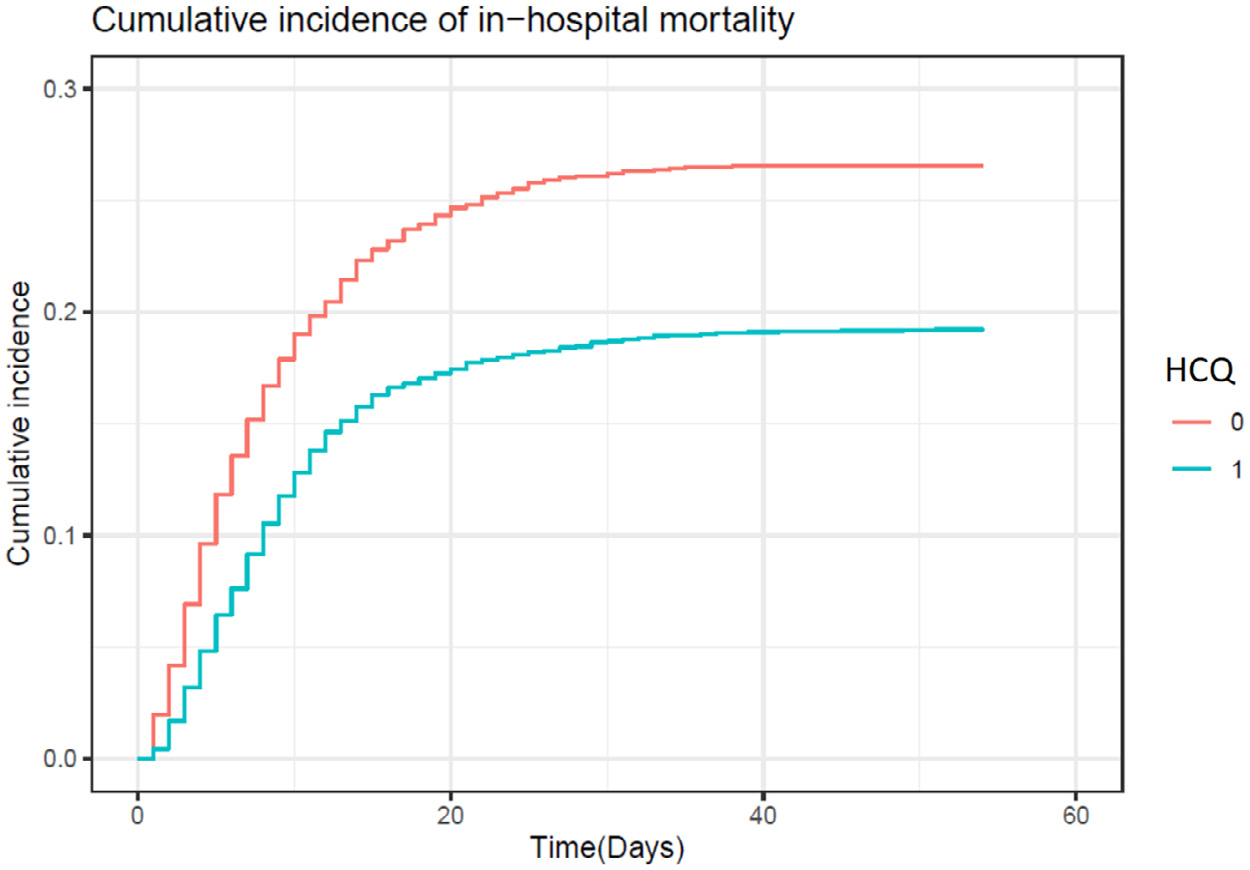
Cumulative In-Hospital Motality, Belgian Study11
The difference is stark. Total mortality was 27.1% for the normal treatment (control) arm, versus 17.7% for the HCQ arm of the study. More than a third of the lives of these critically ill patients were saved. The results were statistically significant at the 99.9% level.
The paper described the HCQ protocol as "low dose", though is closer to "normal doses" for chronic diseases pre-2020. In reference to the RECOVERY trial, the authors state:
. . . the dose administered during the first 24h . . . is equivalent to the dose administered over 5 days in Belgium. The pharmacokinetic rationale for the high dosage remains poorly described.
I think that's academic-ese for, "What the hell were they thinking?"
However, just days after the end point for data collection for this trial, HCQ was banned in Belgium outside of trials. The Belgian study was later published in August 2020.
The results of Belgium's large scale study proved the effectiveness of HCQ. Nonetheless, it was limited in that it only used HCQ as a monotherapy. HCQ works by transporting zinc into the cells, where the zinc inhibits coronavirus replication. But if the zinc is lacking, the effect of HCQ is diminished. Other studies have used HCQ, zinc, and azithromycin together (known as the Zelenko protocol).
Another limitation was that the patients were already hospitalized before they began treatment. It is a basic principle of medicine, that the sooner you treat a condition, the better the outcome.
Another study by Derwand et al. was carried out on out-patients in March - May 2020, in New York State, with a little over five hundred patients (including controls). The treatment protocol used 200mg HCQ twice daily, plus zinc and azithromycin. The outcomes measured were hospitalization rates and death rates. The graph below shows the results for hospitalizations:
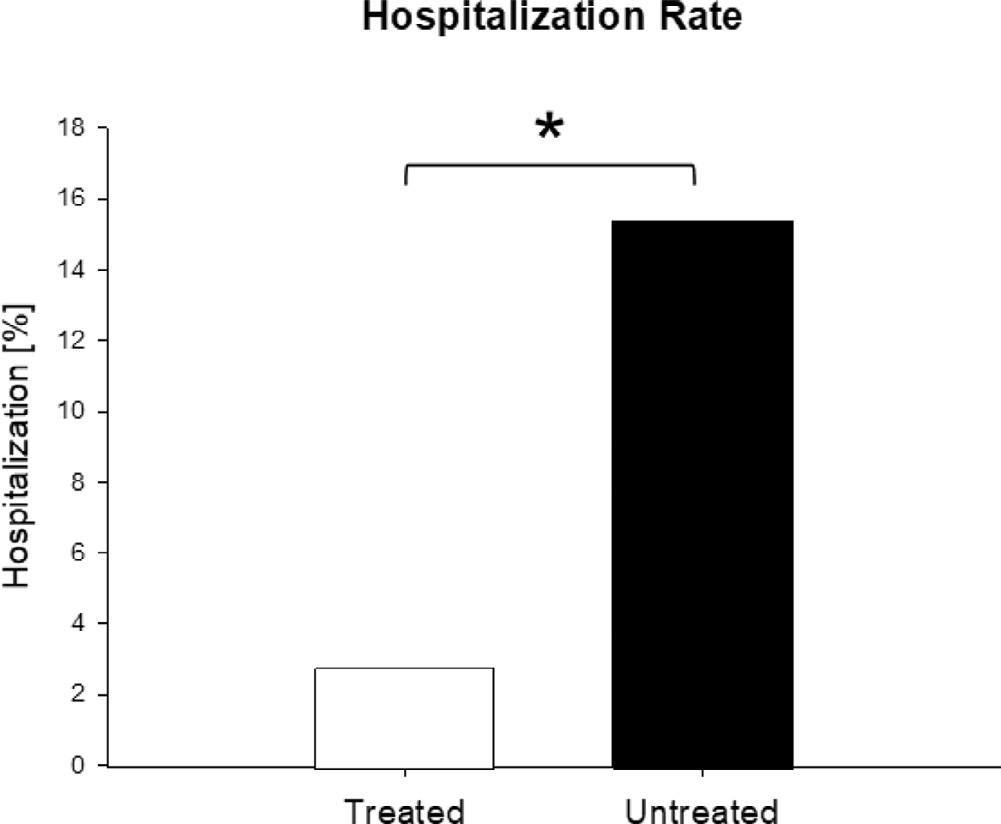
Hospitalization rates in Derwand et al.13
In the treatment group, 2.8% of patients were hospitalized, versus 15.4% in the control group, an 84% reduction, significant at the 95% confidence level. (The data for deaths were in similar proportions.)
The paper also notes:
Zinc deficiency was confirmed in a large number of healthy elderly and in diabetic patients. In addition, it has been documented that . . . antihypertensive drugs . . . can result in increased urinary excretion of zinc with subsequent zinc deficiency. . . . Zinc deficiency might explain why certain groups seem not to benefit from HCQ monotherapy.
Conclusion
HCQ is a synthetic pharmaceutical, and like all such drugs, carries the risk of side effects. However, serious side effects are rare, and it is safer than many common, over-the-counter drugs. It has been widely used for 65 years, and the medical establishment has never shown any concern about its safety before 2020.
As an advocate for natural healing, I am not a natural ally of synthetic drugs - even one derived from plant medicine, as HCQ is. Regarding long term use of any synthetic drug for chronic conditions - I contend that in most situations, one can do better. However, I am realistic. The dominant system of medicine is not going to change within the next seven days. In the current situation, what are needed are the best solutions from within that system, which can be used at scale. And in a medical emergency, so long as we are realistically confined to orthodox medicine, all options within that system should be compared against each other fairly.
Attempts have been made - and in terms of public opinion, with considerable success - to discredit HCQ. Fraudulent studies have been published. Other studies have used doses far beyond established protocols, and then declared the drug dangerous.
However, other studies, including large scale studies, have shown that at doses in line with established protocols, HCQ has shown considerable benefit, even among critically ill patients.
In total, there are now hundreds of studies on treating COVID-19 with HCQ. Overall, there is a huge amount of evidence that at the right dose, and ideally in combination with other treatments, HCQ is beneficial in preventing hospitalizations and saving lives. In addition, there is the experience of doctors who have collectively treated millions of patients outside of studies. (Pre-2020, off-label use of drugs was normal and accepted medical practice.)
And yet this drug, which was easily accessible up to 2019, became prohibited in many states and countries during 2020, and doctors have been threatened with punitive actions should they prescribe it.
Nonetheless, many doctors have risked their careers in speaking out in favour of HCQ, especially as part of a combination of treatments.
Who would benefit from suppressing HCQ?
Consider that a course of the Zelenko protocol including HCQ would cost about $10 per patient. However, a vaccine that can be sold to all, even the healthy, and forced on the unwilling, is a much wider business opportunity. It also sets the precedence for future compulsory "medicine".
Note that all of the deep concern about safety vanished when the "vaccines" were rolled out. Now, even though it is well known and admitted that the "vaccines" can cause death, one is expected to "man up" and play Russian roulette for the public good, (and Big Pharma's bottom line).
The new "vaccines" (the leading inoculations are actually gene-therapy) are experimental. They are still in trials. In the USA at least, the emergency use authorization for these experimental treatments depends on there being no alternative.
And therefore, no alternative can be permitted to succeed.
- Antony
Recommended further reading
White Paper on Hydroxychloroquine15
How a false hydroxychloroquine narrative was created, and more
Notes
: A man thought aquarium cleaner with the same name as the anti-viral drug chloroquine would prevent coronavirus. It killed him., 24th March 2020, Washington Post
: Million, et al. Early treatment of COVID-19 patients with hydroxychloroquine and azithromycin: A retrospective analysis of 1061 cases in Marseille, France, Travel Med Infect Dis, 5th May 2020
: Mehra, et al. [RETRACTED] Hydroxychloroquine or chloroquine with or without a macrolide for treatment of COVID-19: a multinational registry analysis, Lancet, 22nd May 2020
: COVID-19 Virtual Press conference WHO, 25th May 2020
: Covid-19: Lancet retracts paper that halted hydroxychloroquine trials, Guardian, 4th June 2020
: Effect of Hydroxychloroquine in Hospitalized Patients with Covid-19, NEJM, 8th October 2020
: WHO Model List of Essential Medicines, WHO, 2017
: Hydroxychloroquine, Drugs.com
The RECOVERY protocol states:
"So the loading dose in RECOVERY is twice the normal dose for treating malaria."
Comparing the doses in the RECOVERY trial versus the maximum for malaria treatment, the ratio depends on the time in the course that you make the comparison, and peaks at 7:4, almost double. At the 48 hour mark, the total received is 3.2g for RECOVERY and 2g for malaria treatment.
: Nass, WHO and UK trials use potentially lethal hydroxychloroquine dose--according to WHO consultant, 14th June 2020
: Catteau, et al., Low-dose hydroxychloroquine therapy and mortality in hospitalised patients with COVID-19: a nationwide observational study of 8075 participants, Int J Antimicrob Agents, 24th August, 2020
: France, Italy, Belgium act to stop use of hydroxychloroquine for COVID-19 over safety fears, CDC, 27th May 2020
: Derwand, et al., COVID-19 outpatients: early risk-stratified treatment with zinc plus low-dose hydroxychloroquine and azithromycin: a retrospective case series study, Int J Antimicrob Agents, 26th October 2020
: Gold, White Paper on Hydroxychloroquine, America's Frontline Doctors
: Nass, How a false hydroxychloroquine narrative was created, and more, 27th June 2020
Notify me of new posts:
For help with health, see here.
Latest Post:Update from Healing TruthsWhere I've been for the last year. Two schools of thought in natural healing. 23 Apr '26 | Next Post:Mercola and CensorshipInternationally famous natural health advocate is censored and publicly attacked by the establishment. 7 Aug '21 | Previous Post:Spanish Flu, 1918The worst pandemic of the 20th century occurred in 1918. What went so terribly wrong? What does history show about mask mandates? What forgotten treatment did work? 7 Jul '21 |
Latest Post:
Update from Healing Truths
Where I've been for the last year.
Two schools of thought in natural healing.
23 Apr '26
Next Post:
Mercola and Censorship
Internationally famous natural health advocate is censored and publicly attacked by the establishment.
7 Aug '21
Previous Post:
Spanish Flu, 1918
The worst pandemic of the 20th century occurred in 1918. What went so terribly wrong? What does history show about mask mandates? What forgotten treatment did work?
7 Jul '21